★ Certified Mold & Environmental Inspection Since 1998  |  ACAC & IICRC CertifiedServing Orange County & Southern California  |  (949) 239-3727
Post-remediation clearance testing
Post-Remediation Clearance

Independent post-remediation clearance testing

After mold remediation, we verify the work with a visual inspection and clearance sampling, so you have objective proof the area passed rather than the remediator grading their own work.

ACAC & IICRC CertifiedIndependent, No Remediation UpsellAccredited-Lab Reporting
Post-Remediation Clearance

The objective sign-off that the job worked

Clearance testing is the independent check after a remediation contractor finishes, confirming the area is visibly clean and that sampling shows spore levels back within a normal range. It is the verification buyers, sellers, and insurers trust.

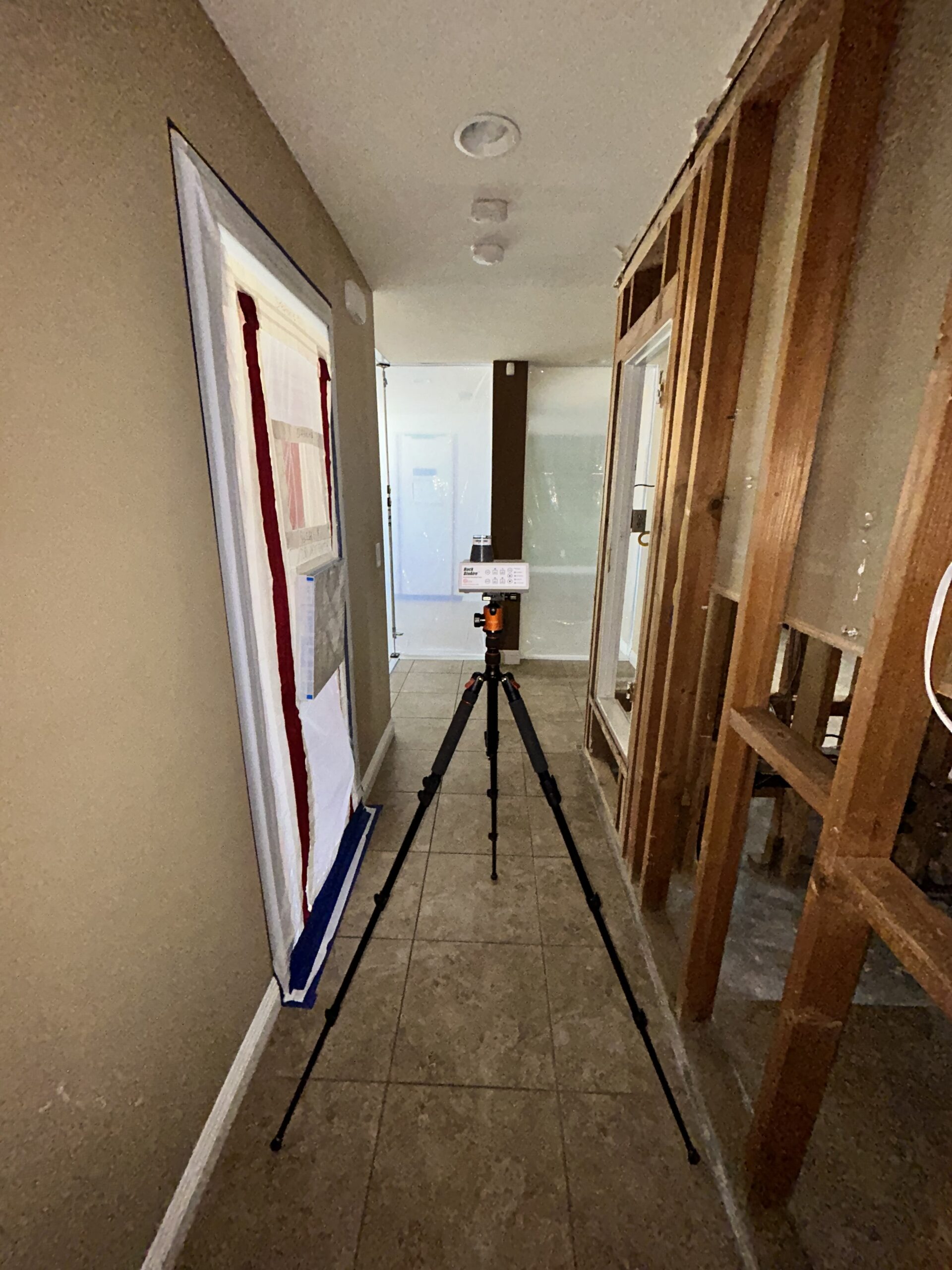
Air sampling pump on a tripod in a hallway sealed with plastic sheeting by the remediation contractor
Air sampling inside containment the remediation contractor had built. We test, we do not remediate.
Air sampling pump beside a bathroom wall the remediation contractor had opened to the subfloor
Air sampling beside a wall the remediation contractor had opened. The opening is their work. The testing is ours.
What you get

Independent verification, not self-grading

Because we did not perform the remediation and do not sell remediation at all, our clearance is objective. If the area fails, we document exactly why so the contractor can correct it before you release payment. If you are still choosing a contractor, here is what to check in a mold remediation quote.
Visual clearance inspectionAir & surface clearance samplingPass or fail written reportIndependent of the remediator
Book an Inspection
Post-remediation clearance testing in Brea
Recent Work

Clearance testing in the field

Real GPMI field work, straight from our inspections across Orange County and Southern California.

What clearance verifies

The remediation steps our clearance signs off on

Clearance testing is done after the remediation contractor reports the work complete, ideally within 24 to 48 hours and with containment still in place, so any problem is caught while it is still easy to fix.

✓

Damage assessment

Review of the inspection report and lab results for visible and hidden mold before sign-off.
✓

Containment check

Confirms the barriers that keep spores from spreading during removal were maintained.
✓

Air filtration

Verifies HEPA air scrubbers and vacuums did their job capturing microscopic spores.
✓

Material removal

Confirms contaminated drywall, flooring, and porous materials were properly removed.
✓

ERMI for contents

Optional DNA testing of belongings, furniture, and clothing where occupants are sensitive.
✓

Restoration readiness

Confirms the area is clean, dry, and ready to be rebuilt and put back into use.

The area passes when it is visibly clean and dry and sampling shows spore counts back within a normal range. If it fails, we document exactly why so the contractor can correct it before you release payment. Only an accredited laboratory should analyze the clearance samples.

When the work is questioned

What a remediation looks like when it did not go right

We are often called in after the work is finished, sometimes because something still smells wrong, sometimes because an insurer or an attorney has asked. These are the conditions that come up again and again, and most of them are invisible once the drywall is back up.

  • Work carried out without adequate containment, or without negative pressure holding the air inside it
  • Demolition done in a way that spread material rather than removing it
  • Cross-contamination into rooms that were never part of the affected area
  • Materials taken out before anybody documented what was there
  • Affected material left in place, particularly inside wall cavities
  • Questionable material encapsulated rather than removed
  • The heating and air conditioning system left unprotected, so the ducts became the pathway
  • Clearance testing that sampled the open room and never addressed the concealed spaces
  • Reconstruction started before the moisture source was corrected, which guarantees a repeat

Our job is to read the physical evidence that is left and say whether it is consistent with a job that was done properly. We measure that against the recognized standards for the work, ANSI/IICRC S500 for the water damage side and ANSI/IICRC S520 for the remediation, and against what the project paperwork actually shows. We do not remediate, so we have nothing to defend and nothing to sell you off the back of the answer.

GPMI inspector documenting findings during an inspection

How your inspection works, in three steps

1

Schedule Your Inspection

Tell us what you are seeing or dealing with, and we book you the soonest appointment, often same-day, at a clear, itemized price.

2

On-Site Inspection & Sampling

We assess the property, locate the moisture source with meters and thermal imaging, and collect the air or surface samples the situation calls for.

3

Lab Report & Next Steps

An accredited lab analyzes the samples and you get a written report with the findings and clear next steps you can act on.

Why GPMI

Independent, so the findings stay honest

We inspect and test only, and never sell remediation, so what our report says is driven by the property, not by a cleanup we are trying to sell you. That independence, backed by accredited-lab analysis and our certifications, is why homeowners, buyers, attorneys, physicians, and insurers rely on our findings.

No remediation upsellAccredited-lab resultsCertified since 1998
Joseph Gutierrez, GPMI founder and Council-certified Structural Mold Investigator
Council-certified Structural Mold Investigator, certificate number 1703019, American Council for Accredited Certification
Reviews

Rated 4.9 across 161 Google reviews

Orange County homeowners, buyers, and property managers on the inspection, the report, and the straight answers.

Read Our Reviews
Questions

Clearance testing FAQ

Straight answers from a certified, independent team.

What is post-remediation clearance testing?
It is the independent check performed after a remediation contractor says the work is finished, confirming that the area is visibly clean, dry, and properly contained, and that sampling shows spore levels back within a normal range for the building. It is the objective sign off that the job actually worked, and it is the difference between being told the problem is solved and being able to demonstrate it.
My remediation company says they will handle the clearance test themselves. Is that a problem?
It is the thing we would push back on hardest. A contractor testing their own work is grading their own homework, and even where they are entirely honest, the result is worth less to everyone who has to rely on it later. The ANSI and IICRC S520 standard says post-remediation verification should be performed by an indoor environmental professional independent of the remediator, and the states that regulate this work require the two roles to be separate. If your contractor has offered to test their own job, that is not a scandal, it is common. It is also worth the cost of an independent second look.
When should clearance testing be done?
After the contractor reports the work complete, but before the containment barriers come down and before the area is rebuilt or put back into use. Ideally within twenty four to forty eight hours of completion, while the space is dry and still sealed. Test after the drywall goes back up and any problem you find is now behind a wall you just paid for.
What happens if the area fails?
We tell you plainly and document exactly why, so the contractor can correct the specific issue before you accept the work or release the final payment. That is the entire point of independent clearance. A failed clearance is not a disaster, it is the protection working, and it is far cheaper than discovering the same thing in six months.
What does clearance testing include?
A visual inspection confirming the area is clean, dry, and that containment and air filtration were properly maintained, followed by air or surface clearance sampling analyzed by an accredited laboratory and compared against an outdoor control. You receive a written report stating clearly whether the area passed, and if it did not, what specifically failed.
Should I pay the contractor in full before clearance?
We would not, and this is worth saying even though it is somebody else's contract. Holding a final payment until an independent clearance passes is normal, reasonable, and the strongest leverage you will ever have to get a correction made willingly. Once the money is gone, a callback becomes a favor.
Can you do the clearance if a different company did the original inspection?
Yes, and it happens often. We do not need to have written the original report to verify the work, though having it helps, because it tells us what the scope was supposed to be and therefore what we should be checking. Send us whatever documentation you have and we will tell you what we can and cannot verify.
Do you also do the inspection before the remediation?
Yes, and many clients use us for both, which brackets the remediation with independent documentation at each end. The pre-remediation inspection defines the problem and the scope, the contractor executes it, and the clearance confirms it was achieved. Neither end is written by the party doing the work in the middle.
How much does clearance testing cost?
It depends on the size of the remediated area and how many clearance samples are needed, and we quote it clearly before we begin. It is almost always a small fraction of what the remediation itself cost, which is the right way to think about it, because it is what protects the money you already spent.
I am a tenant and my landlord's contractor has finished. Can I get my own clearance test?
Yes. You can hire your own independent inspector for the unit you occupy, and where the remediation was done under pressure or after a dispute, an independent clearance is often the only document either side will accept. Tell us the situation and we will scope it to what is accessible to you and note clearly in the report anything we could not reach.
Is a clearance certificate required in California?
No. California does not license mold work or require clearance testing, so nothing legally compels it. What compels it in practice is everyone downstream, because buyers, insurers, lenders, courts, and incoming tenants all want documented proof rather than a contractor's assurance, and an independent clearance report is the document that satisfies them.
Request an inspection

Book your inspection

Tell us what you are dealing with and we will book you the soonest available certified, independent inspection, often same-day.

Prefer email? info@gpmoldinspection.com

Healthy homes, trusted answers. GPMI independent mold and environmental inspections.

Need independent clearance?

Book a certified, independent inspection and get an objective, lab-backed report you can act on.

Privacy Policy · Terms of Use · Manage Cookies · Website by Outdooit · Digital Marketing for Home Services
Call NowBook an Inspection