

Unmasking Invisible Threats: A DIY Guide to Testing for VOCs, Formaldehyde, and More
Why Indoor Air Quality Testing Matters for Your Family’s Health
When you walk into a freshly painted room or bring in new furniture, you might notice the strong smells. These odors often come from volatile organic compounds (VOCs)—invisible chemicals that hide in your air, coming from everyday products like paints, flooring, furniture, and cleaning agents. You may not even realize that these VOCs are silently affecting your health.
Indoor air quality is often worse than you think. The EPA reports that indoor VOC levels can be 2 to 5 times higher than outdoor levels—and can even soar 1,000 times higher when activities like painting occur. California’s energy-efficient homes, designed to save energy, can unfortunately trap these harmful chemicals inside, allowing them to accumulate. If your home’s VOC levels exceed the recommended 500 ng/L, like most homes with 1,200 ng/L, you could be breathing in toxic air every day.
The worst part? Many harmful VOCs are odorless, so you may not even realize you’re being exposed. This silent danger can cause a range of symptoms like chronic headaches, dizziness, fatigue, and respiratory issues. Those most at risk include children, the elderly, and people with pre-existing respiratory conditions. Without proper testing, you might never realize how much these VOCs are affecting your family’s health.
Consumer-grade VOC monitors might be tempting, but they’re often inaccurate, relying on cheap sensors. For reliable results, you need professional testing. Our team uses advanced equipment like photoionization detectors and laboratory analysis to give you precise measurements. Learn more about VOCs, their sources, and how our expert testing services can protect your family from harmful indoor air.
I’m Joseph Gutierrez, founder of Guaranteed Property & Mold Inspections. With over 22 years of experience, I’ve helped many families in Orange County identify environmental hazards and improve their indoor air quality with professional VOC testing. My team uses advanced methods to ensure your home’s air is safe. Contact us today to schedule your Home VOC test and protect your family’s health.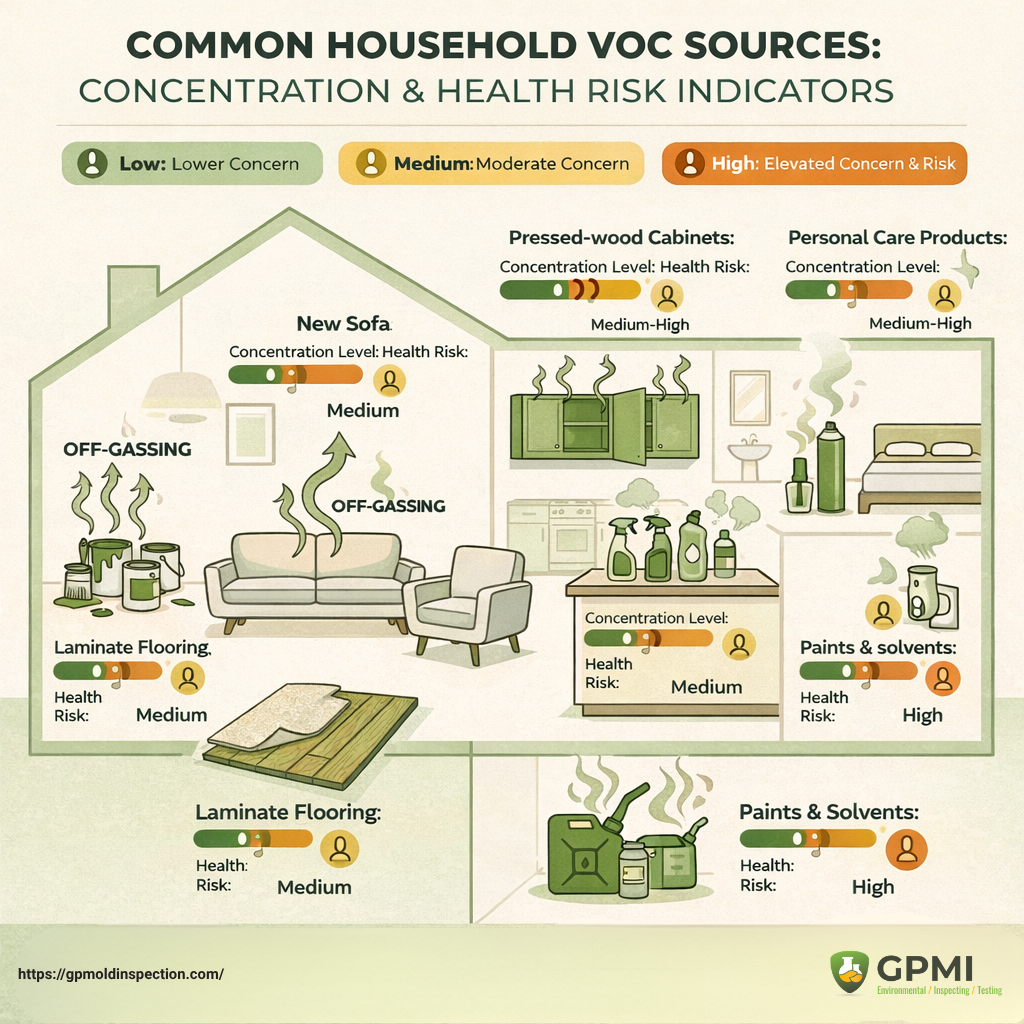
Understanding and Identifying Indoor Chemical Threats
Volatile Organic Compounds (VOCs) are carbon-based chemicals that easily turn into gases at room temperature, a process known as “off-gassing.” While some VOCs are benign, many can degrade your indoor air quality and pose serious health risks. Notable VOCs like formaldehyde (a known carcinogen found in building materials) and benzene (present in paints and stored fuels) are concerning. For a more detailed breakdown of these compounds, see our article on What is TVOC Air Quality?
The primary concern is that our homes can trap these chemicals. The Environmental Protection Agency (EPA) warns that sustained VOC exposure can lead to damage to the liver, kidneys, and central nervous system, and some VOCs are known or suspected carcinogens. Identifying these invisible threats through Home VOC testing is a critical step in protecting your family.
Common Sources: From New Furniture to Building Materials
VOCs are found in numerous everyday products around your home. Identifying where they come from is the first step in reducing your exposure. Common sources include:
- Building & Renovation Materials: Items like paints, adhesives, insulation, drywall, and new flooring materials such as vinyl or carpet.
- Furniture & Cabinetry: Pressed-wood products, such as particleboard and MDF, often contain formaldehyde-based resins that release VOCs over time.
- Household & Personal Products: Common household items like cleaning products, air fresheners, disinfectants, cosmetics, and hobby supplies (glues, paints).
- Stored Fuels & Office Equipment: Gasoline in an attached garage or the emissions from office equipment like printers and copiers can add VOCs to your indoor air.
In energy-efficient homes, these VOCs are even harder to escape, especially in California, where tightly sealed homes trap pollutants. For workplace-related concerns, read more about VOCs and Formaldehyde in the Workplace.
Unexplained Symptoms? The Health Effects of VOC Exposure
Have you been experiencing frequent headaches, dizziness, or irritation in your eyes, nose, or throat? These are common symptoms of poor air quality, often caused by VOC exposure. If these symptoms seem to worsen when you’re at home, it’s a sign that your indoor air may be affecting your health. For more details, refer to our article on Poor Air Quality Symptoms.
Long-term health risks are more serious and can include damage to major organs and an increased risk of cancer. Children, older adults, and individuals with respiratory conditions like asthma are particularly vulnerable.
Disclaimer: Guaranteed Property & Mold Inspections does not diagnose or treat medical conditions. Our role is to provide objective environmental data to support physicians through independent inspections, which are performed separately from remediation services. This data helps bridge the gap between environmental findings and medical diagnoses. We can also offer referrals to medical professionals experienced in mold-related illness to address concerns that may be related to Sick Building Syndrome: What Is It?.
A Practical Guide to Home VOC Testing and Mitigation
What you can’t see in the air of your home can be harmful. Professional VOC testing is the only way to identify invisible chemical threats in your indoor air and take the necessary steps to protect your family’s health.
How Guaranteed Property & Mold Inspections Approaches Home VOC Testing
With over 22 years of experience, Guaranteed Property & Mold Inspections offers independent and objective assessments of your home’s air quality. Our team uses advanced, lab-grade testing methods that provide far more reliable data than typical consumer-grade devices.
Our professional Home VOC testing methods include:
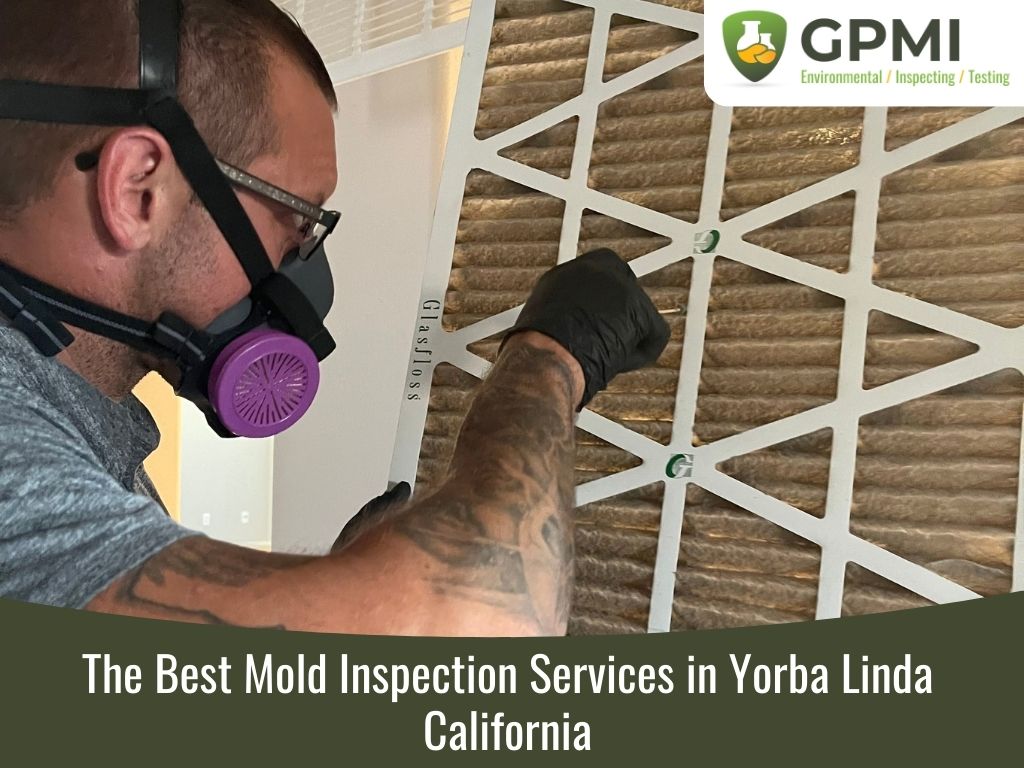
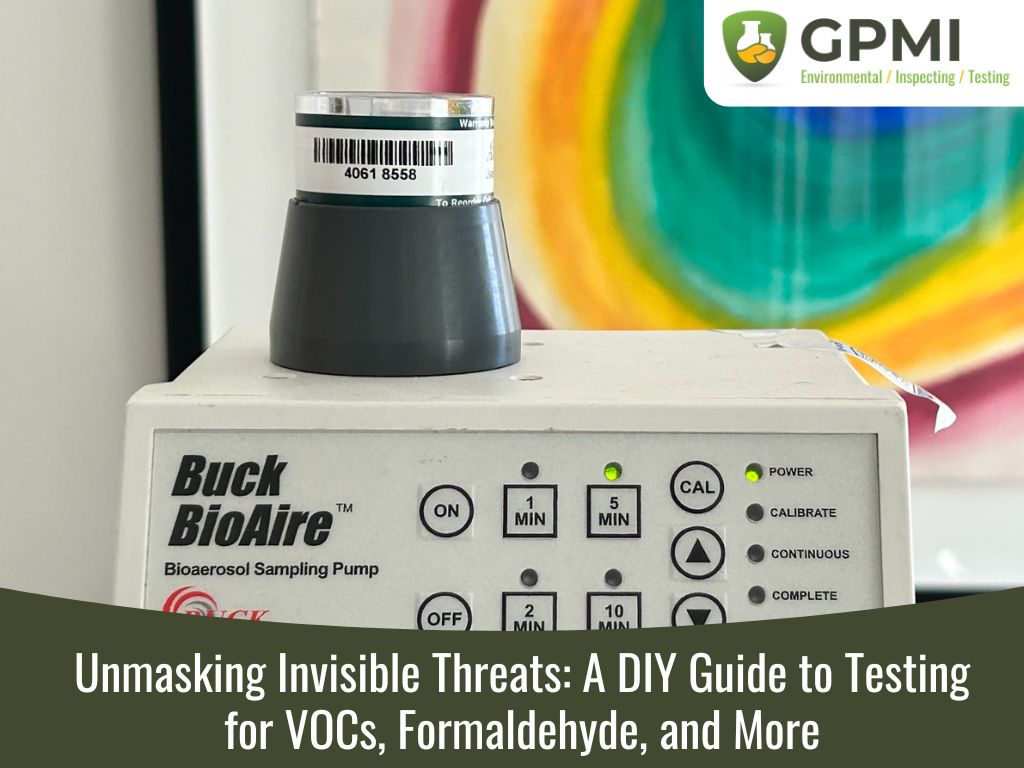
- Photoionization Detectors (PIDs): Advanced screening tools for real-time readings of total VOC levels to identify potential sources.
- Gas Chromatography/Mass Spectrometry (GC/MS): Air samples are collected using sorbent tubes or SUMMA canisters and sent to an accredited lab. This analysis provides a precise chemical fingerprint, identifying over 500 individual VOCs.
Professional testing is essential for an accurate picture of your home’s air. For more details on our methods, see our guide on How to Test Air Quality.
It’s time to call a professional for VOC testing if:
- You’ve recently completed renovations or purchased new furniture.
- You’re preparing a nursery or home for vulnerable individuals.
- Your family is experiencing unexplained health symptoms.
- Your home has experienced water damage or a fire, both of which can release mold VOCs (MVOCs). Learn more in our Post-Fire VOC Testing article.
- You notice persistent, unusual odors around your home.
We proudly serve homeowners across Southern California, including Orange County, Los Angeles County, and surrounding communities.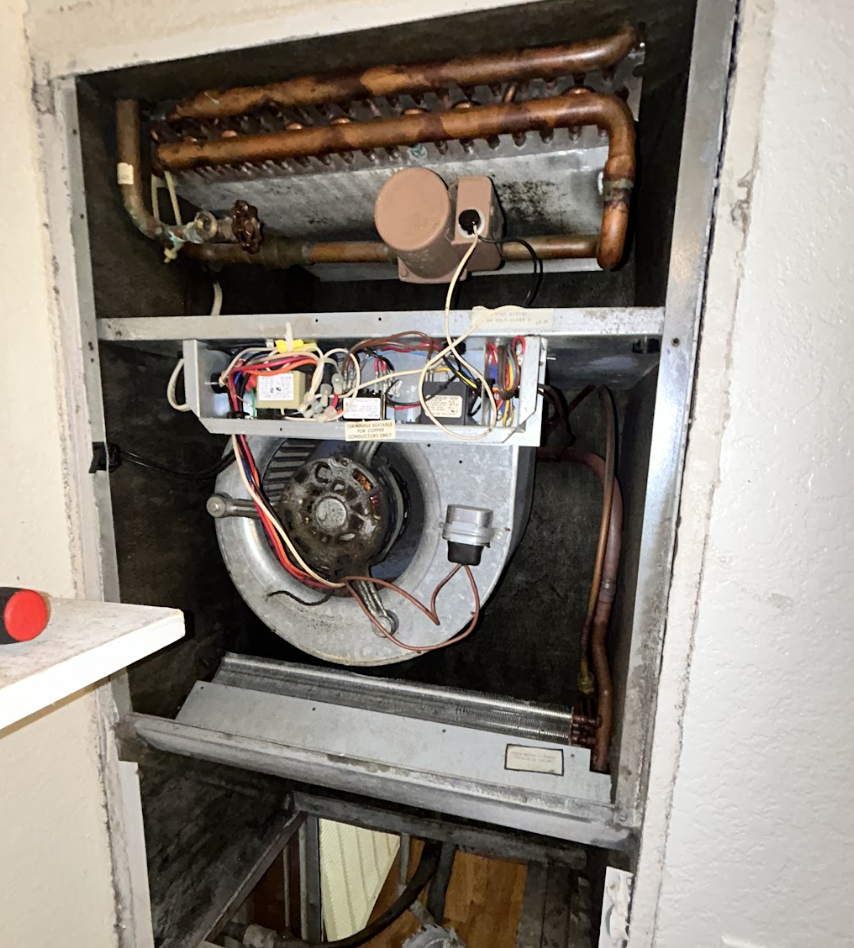
Decoding Your Report: What Do VOC Levels Mean?
VOC reports can seem overwhelming, but we’re here to help you understand them. The Total Volatile Organic Compounds (TVOC) measurement offers a snapshot of your home’s chemical load. Key benchmarks include:
- Healthy Environment: Below 500 ng/L (U.S. Green Building Council guidelines).
- Median U.S. Home: Approximately 1,200 ng/L.
- New Buildings (LEED-certified): Maximum of 0.5 mg/m³.
- Concerning Levels: Anything above 0.5 mg/m³ indicates a need for source identification and removal.
We compare your home’s readings against established guidelines from the EPA and OSHA to explain what the numbers mean for your family’s health. For more on understanding these reports, see our guide on interpreting a Home Inspection Report. We rely on Scientific research on interpreting chemical data for accurate insights.
Actionable Steps for Reducing VOCs and Improving Air Quality
Once you’ve completed Home VOC testing, it’s time to take action. Effective strategies for reducing VOCs include:
- Source Control:
- Choose low-VOC or zero-VOC products.
- Air out new furniture and building materials.
- Store chemicals in a detached garage.
- Use unscented, natural cleaning products.
- Ventilation:
- Open windows regularly to let fresh air in.
- Use exhaust fans in kitchens and bathrooms.
- Consider an Energy Recovery Ventilator (ERV) for continuous fresh air exchange.
- Air Purification:
- Use air purifiers with activated carbon filters to absorb VOCs.
- Consider a whole-home air purification system.
For help with VOC testing or referrals to trusted medical professionals, please Contact Us.
Our independent testing provides the objective data you need to make informed decisions. We are committed to your family’s health and can provide referrals to trusted medical professionals. If you have concerns, please Contact Us for Air Quality Testing.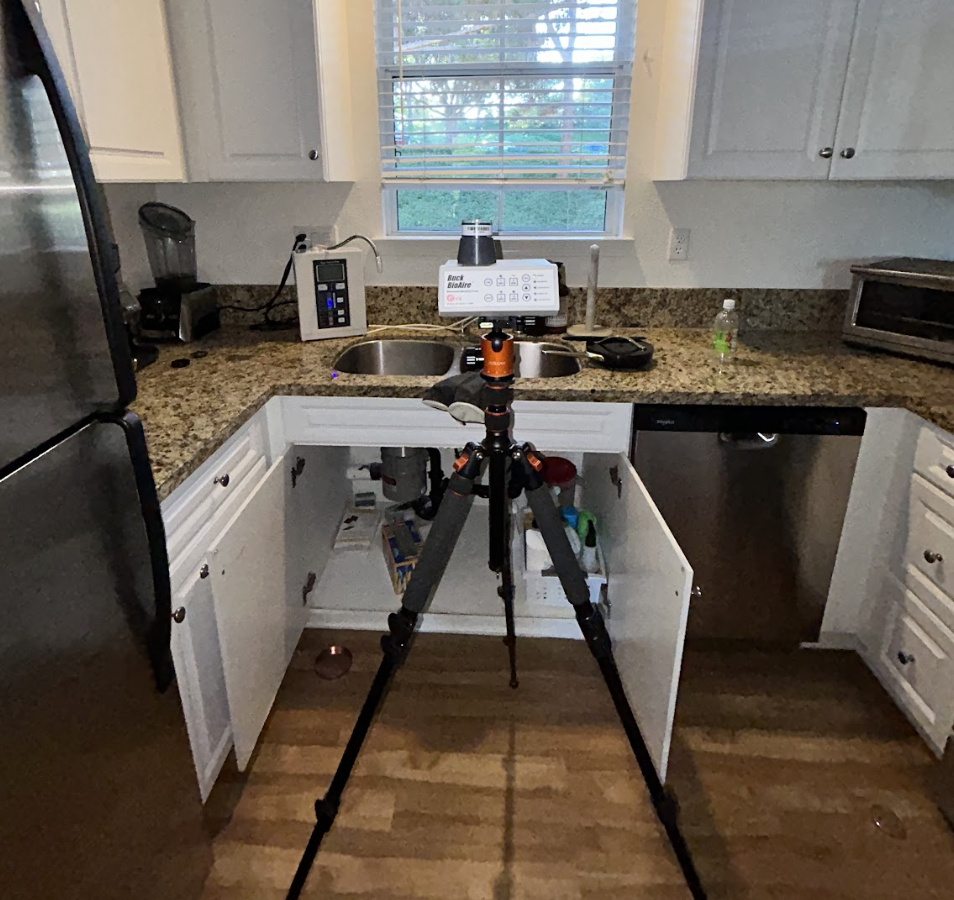
Real-World Conditions in California: Why Local Expertise Matters
Living in California poses specific challenges for indoor air quality. The climate and construction practices—like slab foundations and stucco exteriors—create ideal conditions for VOCs and mold to thrive. While energy-efficient homes are great for saving on utility bills, they can trap VOCs and other pollutants inside if not properly ventilated.
Water intrusion is a major concern. Whether from leaky roofs, plumbing, or foundation cracks, moisture can lead to mold growth in just 24-48 hours. As mold grows, it releases its own VOCs (MVOCs), adding to the chemical load in your air. Because mold and many VOCs are often hidden and odorless, a visual inspection is rarely enough to identify a problem.
Recent events across the state underscore these risks. Heavy rains and flooding, as noted in an IQAir California Flood Watch, increase the likelihood of water damage and subsequent mold issues. Reports on environmental hazards in communities like Malibu and mold problems in L.A. apartments highlight that these are widespread issues. The health impacts are serious, as emphasized by the California Department of Public Health (CDPH) and a Newsweek article on hidden mold. The medical community also recognizes these risks, with the ACMT issuing a position statement on mold exposure. Other airborne threats, like climbing Valley Fever cases, further complicate our indoor air.
With more than 22 years of experience across Orange and Los Angeles counties, we have a strong grasp of the local environmental factors that can affect indoor air quality. This allows us to deliver thorough Home VOC testing and air quality assessments suited to the unique conditions of Southern California homes. To learn more or get started, contact us today.
References
- EPA: Volatile Organic Compounds’ Impact on Indoor Air Quality (https://www.epa.gov/indoor-air-quality-iaq/volatile-organic-compounds-impact-indoor-air-quality)
- EPA: Integrated Risk Information System (IRIS) (https://www.epa.gov/iris)
- IQAir: Indoor Air Quality Alert: California Flood Watch (https://www.iqair.com/la/newsroom/indoor-air-quality-alert-california-flood-watch)
- California Department of Public Health (CDPH): Mold – Indoor Air Quality & Health (https://www.cdph.ca.gov/Programs/CCDPHP/DEODC/EHIB/CPE/Pages/Mold.aspx)
- Newsweek: The Hidden Home Hazard That Could Be Making You Sick (https://www.newsweek.com/mold-impact-health-2054696)
- ACMT: ACMT Position Statement: Medical Toxicology Considerations in the Diagnosis and Treatment of Patients with Concerns About Mold‑Related Inhalation Exposures (https://www.acmt.net/news/acmt-position-statement-medical-toxicology-considerations-in-thediagnosis-and-treatment-of-patients-with-concerns-aboutmold-related-inhalation-exposures/)
- UCLA Health: Valley Fever Cases Climbing Statewide (https://www.uclahealth.org/news/article/valley-fever-cases-climbing-statewide)