

Is Your Air Clean? Everything You Need to Know About Air Quality Monitors
Why Your Indoor Air Quality Matters More Than You Think
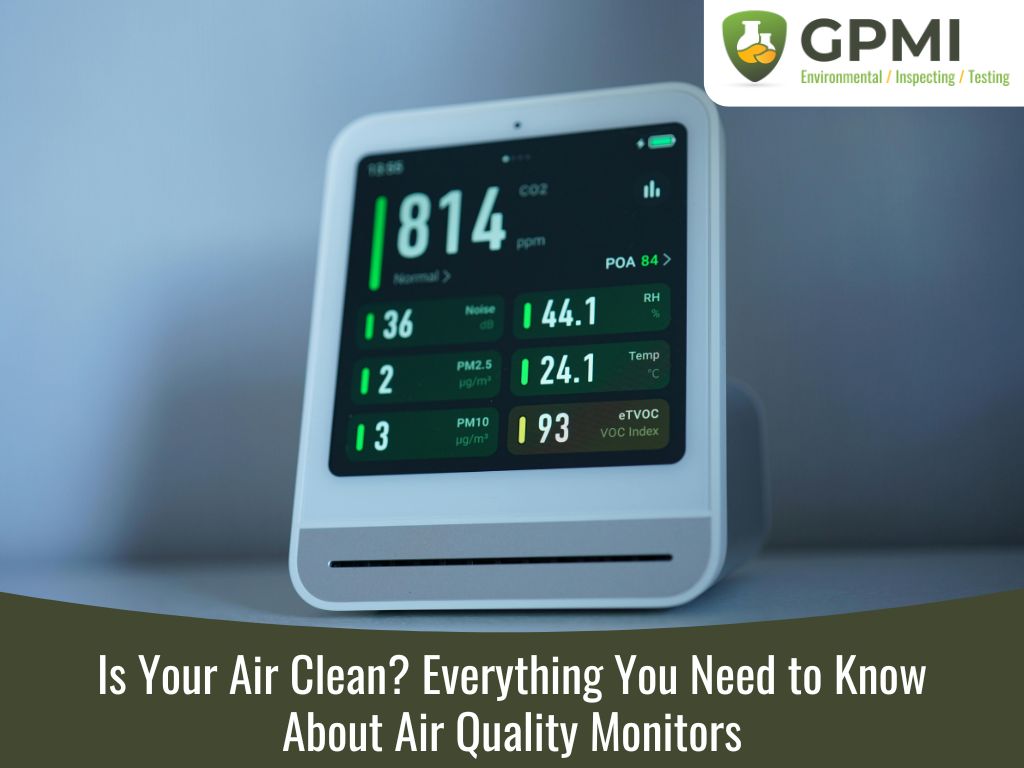
An air quality monitor is a device that measures indoor pollutants like particulate matter (PM2.5, PM10), volatile organic compounds (VOCs), carbon dioxide (CO2), and radon. By providing real-time data on a display or app, these monitors help you know when to act—whether it’s by opening a window, turning on an air purifier, or looking for a pollution source.
Key things to know about air quality monitors:
- What they detect: PM2.5, PM10, VOCs, CO2, radon, temperature, and humidity
- Why they matter: Indoor air can be 2-5 times more polluted than outdoor air
- Limitations: Consumer monitors provide general readings but cannot identify specific VOCs or mold species
- When to upgrade: Persistent health symptoms, post-water damage, or real estate transactions require professional environmental testing
While outdoor air quality apps are useful during wildfire season, they don’t account for indoor pollution from construction materials, cleaners, or poor ventilation. These sources can create a mix of contaminants affecting your health in subtle ways.
Symptoms like persistent headaches, fatigue, or respiratory irritation that improve when you leave home are often your body’s response to these environmental factors. An air quality monitor is the first step to identifying and addressing them.
As the founder of Guaranteed Property & Mold Inspection, I’ve spent 15 years helping residents connect health symptoms to their environment. This guide will explain what consumer monitors can—and can’t—tell you, and when a professional assessment is needed.
Understanding Your Indoor Air Quality Monitor
What Pollutants Do Monitors Detect?
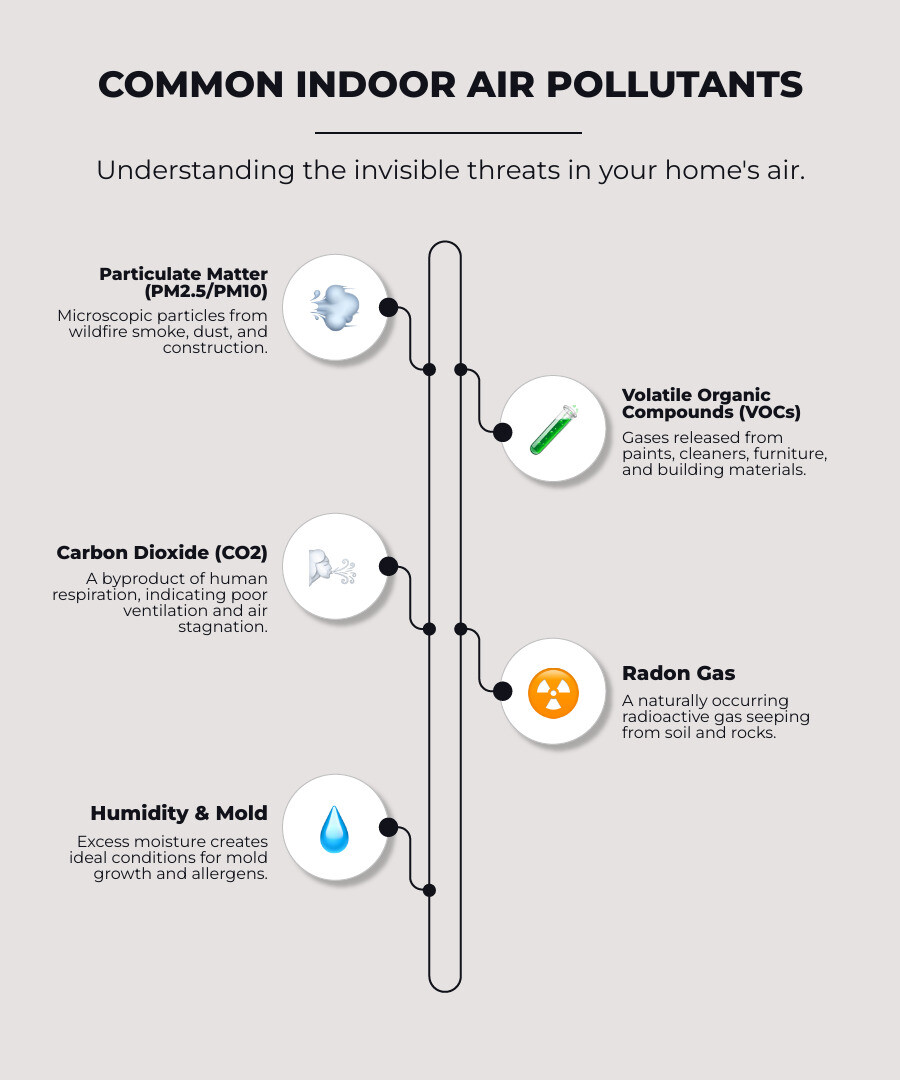
A good air quality monitor detects several invisible threats. Key pollutants include Particulate Matter (PM2.5 & PM10), tiny particles from wildfire smoke or dust; Volatile Organic Compounds (VOCs), which are gases from paints, cleaners, and furniture (learn more about TVOC Air Quality and VOCs in the Workplace); and Carbon Dioxide (CO2), an indicator of poor ventilation. Some monitors also detect Radon, a radioactive gas from the soil, and track Temperature and Humidity, which are crucial for preventing mold growth, a common issue after heavy rains and a concern with HVAC Systems.
How Pollutants Impact Your Health
Poor indoor air quality can cause everything from immediate discomfort to serious long-term conditions. Short-term, pollutants like VOCs or high CO2 can trigger dizziness, headaches, and fatigue—common Poor Air Quality Symptoms. Over time, fine particulate matter (PM2.5) can enter the bloodstream, contributing to chronic respiratory diseases, heart disease, and cancer. If symptoms ease when you leave a building and return when you come back, it may point to Sick Building Syndrome. By pairing symptom patterns with objective air testing data, it becomes much easier to pinpoint and address the true environmental causes.

How an Indoor Air Quality Monitor Works
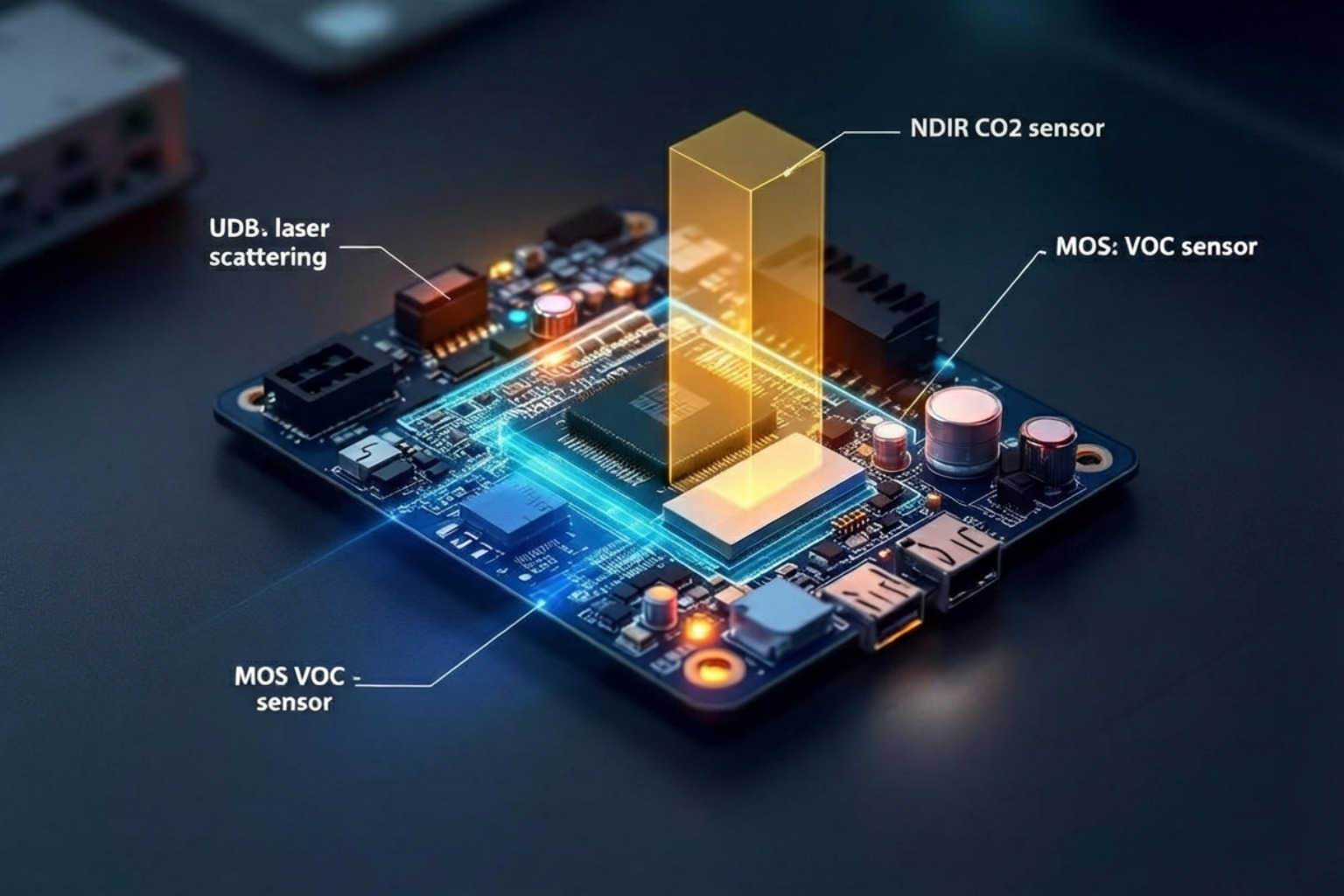
An air quality monitor uses various sensors to measure airborne pollutants. For example, lasers detect dust particles (PM), infrared light measures CO2, and other sensors react to a broad range of gases to provide a Total VOC (TVOC) reading. Specialized sensors count decaying particles to measure radon. The monitor processes this data and presents it in real-time on a display or app, helping you track your home’s air quality over time and identify pollution patterns.
Key Features of a Good Air Quality Monitor
When choosing an air quality monitor, look for these key features:
- Comprehensive Detection: Measures key pollutants like PM2.5, VOCs, CO2, and ideally radon, plus temperature and humidity.
- Sensor Accuracy: Uses reliable technology like NDIR for CO2 and laser counters for PM.
- Clear Display: Provides easy-to-read data via a screen or color-coded lights.
- Mobile App & Smart Alerts: Offers an app (Google Play, App Store) with historical data, trends, and alerts.
- Data History: Lets you track trends to see what causes pollution and if your fixes work.
- Power Flexibility: Offers battery or plug-in options for portability or continuous monitoring.
- Smart Home Integration: Connects to systems like Alexa to automate air purifiers.
Using Data to Improve Your Air
An air quality monitor provides actionable data. Once you understand the readings (often a color-coded AQI), you can take these steps:
- Improve Ventilation: If CO2 is high, open windows or use exhaust fans to bring in fresh air.
- Use Air Cleaners: For high particles (PM) or VOCs, run an air purifier with HEPA and activated carbon filters. Use a dehumidifier if humidity is high to prevent mold. Learn more about Indoor Air Cleaning methods.
- Address Local Issues: In California, a monitor helps you manage wildfire smoke infiltration, assess radon risks, and detect high humidity after rains, which can signal hidden water damage or mold. A data-driven approach is key to managing your home’s Air Quality.
Consumer Monitors vs. Professional Environmental Testing
Consumer air quality monitors are great for daily awareness, but they have limits.
Consumer Monitor Pros: They are affordable, provide real-time feedback, and empower you to make daily improvements.
Consumer Monitor Cons: Their accuracy varies, and they provide general readings. A VOC sensor gives a Total VOC (TVOC) number but can’t identify specific toxic chemicals or mold species. The data also lacks legal or medical standing.
When to Call a Professional: Professional testing is essential for definitive answers. Call an expert if you experience:
- Persistent Health Symptoms: If your family has unexplained health issues that improve when away from home, professional testing provides objective data for your doctor.
- Post-Water Damage: After a leak or flood, a professional can find and identify hidden mold.
- Real Estate Transactions: Get unbiased data for peace of mind when buying or selling a home.
- Specific Pollutant Concerns: Specialized testing is required for hazards like lead, asbestos, or specific chemicals.
An independent assessment provides reliable, defensible data, which is Why Indoor Air Quality Testing is so critical. Our inspections are independent, ensuring you receive unbiased, scientific results.
Taking the Next Step Toward a Healthier Home
The journey to a healthier home starts with understanding. An air quality monitor provides a window into your home’s air, empowering you to make informed decisions for your family’s well-being and bringing peace of mind.
For complex indoor air quality issues in Orange County, Los Angeles County, and surrounding areas, an independent assessment is key. At Guaranteed Property & Mold Inspection, we provide unbiased, scientific data you need to protect your family’s health, treating every inspection as if it were for our own.
Disclaimer: Guaranteed Property & Mold Inspection does not diagnose or treat medical conditions. Our role is to provide objective environmental data to support physicians through independent inspections, which are performed separately from remediation services. We can also offer referrals to medical professionals experienced in mold-related illness.
Ready to take control of your home’s air quality? Learn more about our comprehensive Air Quality Testing services today.