


Why Mold Spreads So Fast After California Rain
- 1. Buildings in Dry Climates Aren’t Moisture-Ready
- 2. Wind-Driven Rain Penetrates Building Envelopes
- 3. Poor Drainage Creates Hidden Moisture Zones
- Common Mold Hot Spots After Rain in California
- What Heavy Rain Does to Your Property
- How to Protect Your Property During California’s Rain Season
- Why California Homeowners Should Test for Mold After Rain


When California’s dry months suddenly give way to winter storms, homeowners across Orange County face an unexpected threat: rapid mold growth. Unlike homes in perpetually humid climates, California properties aren’t built to handle sustained moisture—making them particularly vulnerable to mold after rain events.
The problem isn’t just aesthetic. Mold after rain can compromise your indoor air quality, trigger severe health symptoms, and cause thousands of dollars in structural damage if left unchecked. Understanding why California homes are uniquely susceptible and knowing what to do in those critical 24-48 hours after a storm, can mean the difference between a minor maintenance issue and a full-scale remediation project.
In this comprehensive guide, we’ll explain the science behind post-rain mold growth, identify the most vulnerable areas in your home, and provide actionable steps to protect your property and health during California’s unpredictable rain season.
1. Buildings in Dry Climates Aren’t Moisture-Ready
California’s construction standards evolved around drought conditions and the hot-dry climate. The materials, ventilation systems, and building envelopes standard in Orange County homes are optimized for heat management, water conservation, and energy efficiency during extended dry periods—not sustained moisture intrusion from winter storms.
Here are four key reasons dry-climate homes struggle when sudden moisture hits:
- Heat dissipation rather than moisture control
- Drought-resistant landscaping that creates poor drainage patterns
- Lightweight framing that absorbs water quickly
- Stucco exteriors are prone to cracking in dry conditions
When sudden storms arrive, moisture infiltrates these spaces that rarely experience dampness:
- Attics: Where roof ventilation designed for heat can actually pull rain inside
- Wall cavities: Where minimal insulation offers no moisture barrier
- Under flooring: Where slab-on-grade construction lacks proper vapor barriers
- Crawlspaces: Often unventilated and lacking proper moisture management systems
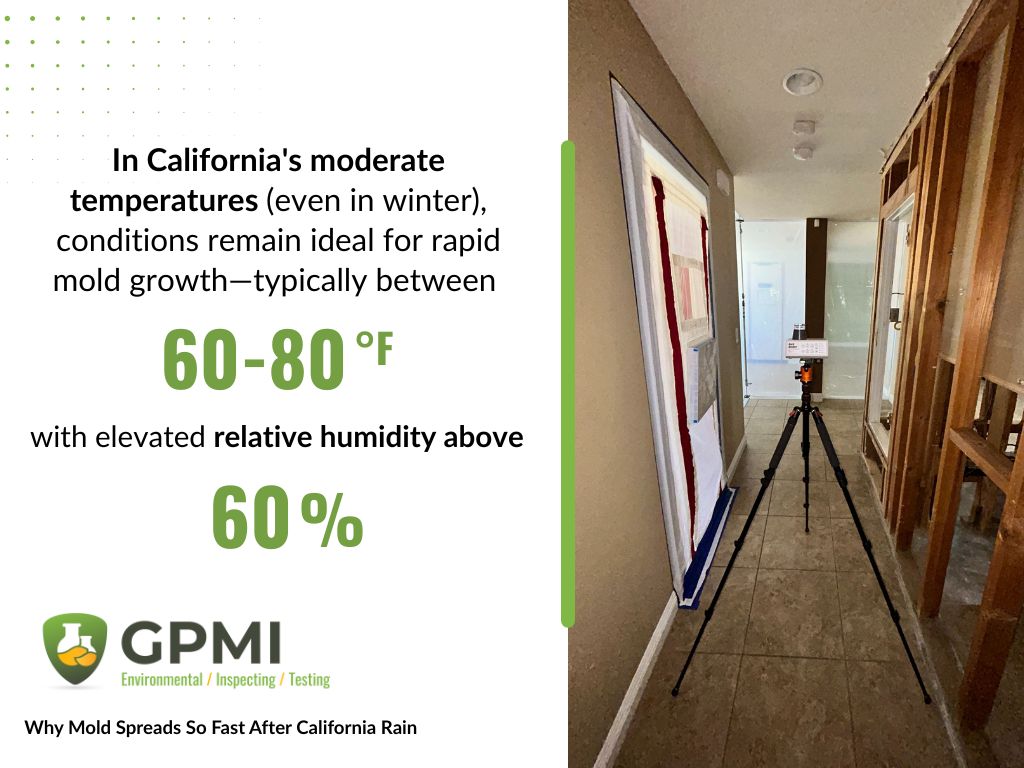
The timeline is critical: Once moisture penetrates these areas, mold colonization begins within 24-48 hours. In California’s moderate temperatures (even in winter), conditions remain ideal for rapid mold growth—typically between 60-80°F with elevated relative humidity above 60%.
2. Wind-Driven Rain Penetrates Building Envelopes
Southern California storms aren’t gentle. They often bring:
- Horizontal rain driven by 20-40 mph winds
- Rapid temperature fluctuations cause expansion/contraction in building materials
- Concentrated downpours overwhelm drainage systems designed for minimal rainfall
Wind-driven rain exploits weaknesses in your building envelope that would never be exposed during dry months. Common penetration points include:

- Stucco cracks: Southern California’s clay soil expansion and seismic activity create microfissures that become water highways
- Window seals: UV degradation and thermal cycling compromise weatherstripping
- Roof flashing: Around chimneys, skylights, and vent pipes—often the first failure point
- Siding gaps: Where horizontal surfaces meet vertical ones
- HVAC penetrations: Unsealed conduit entries and old caulking
- Electrical boxes: On exterior walls lacking proper gaskets
You don’t need catastrophic flooding—even a tablespoon of water repeatedly entering the same spot can create a thriving mold colony within days.
3. Poor Drainage Creates Hidden Moisture Zones

California’s hardpan clay soil—baked solid for 9-10 months each year—doesn’t absorb stormwater efficiently. Instead, heavy rain:
- Pools around foundations: Creating hydrostatic pressure that forces water through foundation walls
- Saturates decorative rock beds, which hold moisture against stucco and siding
- Overwhelms French drains: That may be clogged with sediment from dry months
- Flood window wells: Particularly in split-level homes, which are typical in Orange County
This surface water doesn’t just sit harmlessly outside. Through capillary action, it wicks into:
- Concrete slab foundations
- Wood framing in contact with soil
- Carpet and padding along exterior walls
- Baseboards and drywall along the foundation line
The result: Elevated interior humidity (often 65-75%) in rooms that should be 40-50%, creating ideal conditions for mold after rain events.
Common Mold Hot Spots After Rain in California
After winter storms, certain areas of your home become moisture magnets. These are the spots where mold colonies first establish themselves—and where professional inspectors focus during post-rain assessments.

- Attics (roof leaks, clogged vents, damaged shingles)
- Crawlspaces (groundwater seepage, poor drainage)
- Garages (drafty walls, unsealed doors)
- Interior Walls (rain intrusion through stucco cracks)
- Bathrooms (extra humidity with winter showers + no ventilation)
- HVAC Systems (wet ducts = air quality issues)
If you notice any musty odors, water stains, or discoloration in these areas, take photos and document the date and location. This documentation is critical for insurance claims and helps certified inspectors, such as those at Guaranteed Property & Mold Inspections, identify the source and extent of contamination. Don’t wait until visible mold appears—early detection through professional testing can prevent serious health issues and costly remediation.
What Heavy Rain Does to Your Property
The damage from California rainstorms doesn’t end when the skies clear. In fact, that’s when the real problems begin as trapped moisture starts its destructive work on your home’s structure and your family’s health.
✔️ Trapped Moisture
Even when surfaces appear dry, moisture can be trapped in insulation, wood framing, drywall, and carpet padding.
✔️ Structural Rot
Chronic dampness weakens wooden framing, roof decking, and subfloors.
✔️ Indoor Air Pollution
Unhealthy indoor air quality affects people with allergies, asthma, autoimmune issues, or chemical sensitivities.
Moisture feeds:
- Mold spores
- Bacteria
- VOC off-gassing
- Musty odors
✔️ Reduced Property Value
Wet materials fail clearance tests, causing reinspection delays. Insurance often tries to deny coverage, so documentation is key.
How to Protect Your Property During California’s Rain Season

1. Act Fast — Mold Starts in 24–48 Hours
If you see stains, bubbling paint, damp drywall, or smell an odor, treat it as an active moisture intrusion.
2. Get a Professional Moisture & Air Quality Test
A certified inspector (like GPMI) uses:
- Moisture meters
- Infrared cameras
- Air sampling
- ERMI or PCR testing (if needed)
to find hidden water damage before it becomes a disaster.
3. Fix Drainage and Roof Issues
After storms, check:
- Gutters and downspouts
- Pooling water around the home
- Roof tiles or shingles
- Window seals
4. Keep Indoor Humidity Below 50%
Use:
- Dehumidifiers
- Exhaust fans
- Proper HVAC settings
The most important step you can take is scheduling a post-rain inspection before problems become visible. GPMI’s ACAC-certified inspectors can identify moisture intrusion and mold risk during a single visit, providing you with a clear action plan and peace of mind. Don’t wait until you smell it—by then, the damage is already spreading.
Why California Homeowners Should Test for Mold After Rain
Because mold isn’t always visible, most people don’t know they have an issue until symptoms show up:
- Musty smell
- Headaches
- Persistent coughing
- Fatigue
- Respiratory irritation
A post-rain inspection can detect damage early, prevent costly repairs, and ensure a safe indoor environment. Early detection changes everything.
Don’t wait for visible mold or health symptoms to appear. Schedule your post-rain inspection today and get the peace of mind that comes from knowing exactly what’s happening inside your walls.
Call (949) 996-9362 to book your inspection—because the best time to test for mold is before you can see it.


