


Most mold inspections are written for the person who ordered them. A forensic mold inspection is written for the person who will try to take it apart.
Related from GPMI: A mold inspection, independent and lab-based.
That is the difference, and it decides whether a report is useful in a claim, a dispute or a transaction. This page is for attorneys, physicians, property managers and building owners who need findings that survive scrutiny rather than reassurance.
What makes an inspection forensic
Nothing exotic. The same instruments, applied with a different standard of record keeping.
Everything is measured, not characterized
A conventional report says a wall was damp. A forensic report gives the reading, the instrument, the material and the location, so a second inspector can stand in the same place and check.
Observation is separated from inference
What was measured is 1 thing. What that implies about how long a building has been wet is another. A report that blends them gives the other side something to attack. A report that separates them on its face does not.
Gaps are documented

Where access was refused, blocked by building materials or unsafe, that is recorded. An inspector who claims to have seen everything invites the question of how.
Chain of custody is intact
Air samples and swab samples are logged from collection to laboratory. Without it, a laboratory result is a number with no provenance.
The 4 questions a forensic inspection answers
- Is there mold growth, and where? Visible mold and hidden growth, located and photographed.
- How far does it extend? The boundary matters more than the presence, because it determines the scope and therefore the budget.
- What is keeping it wet? Water intrusion is the actual finding. Growth is the symptom, and moisture problems are what a remedy has to address.
- How long has this been happening? The hardest question and frequently the decisive one, because liability usually turns on duration and notice.
The process
Visual inspection
A methodical walk of the affected area and everything connected to it. Ceiling, wall cavities, flooring, mechanical spaces and roof penetrations. Signs of past repair are recorded as carefully as active growth, because they speak to what somebody already knew.
Moisture mapping

Readings taken systematically across building materials rather than at the obvious spot, to establish the footprint. This is what determines severity, and it is what a contractor should be pricing from.
Infrared technology

Thermal imaging locates temperature differences suggesting moisture behind a finish. Infrared technology points, it does not prove, so every anomaly is confirmed with a meter before it reaches the report.
Air samples and swab samples
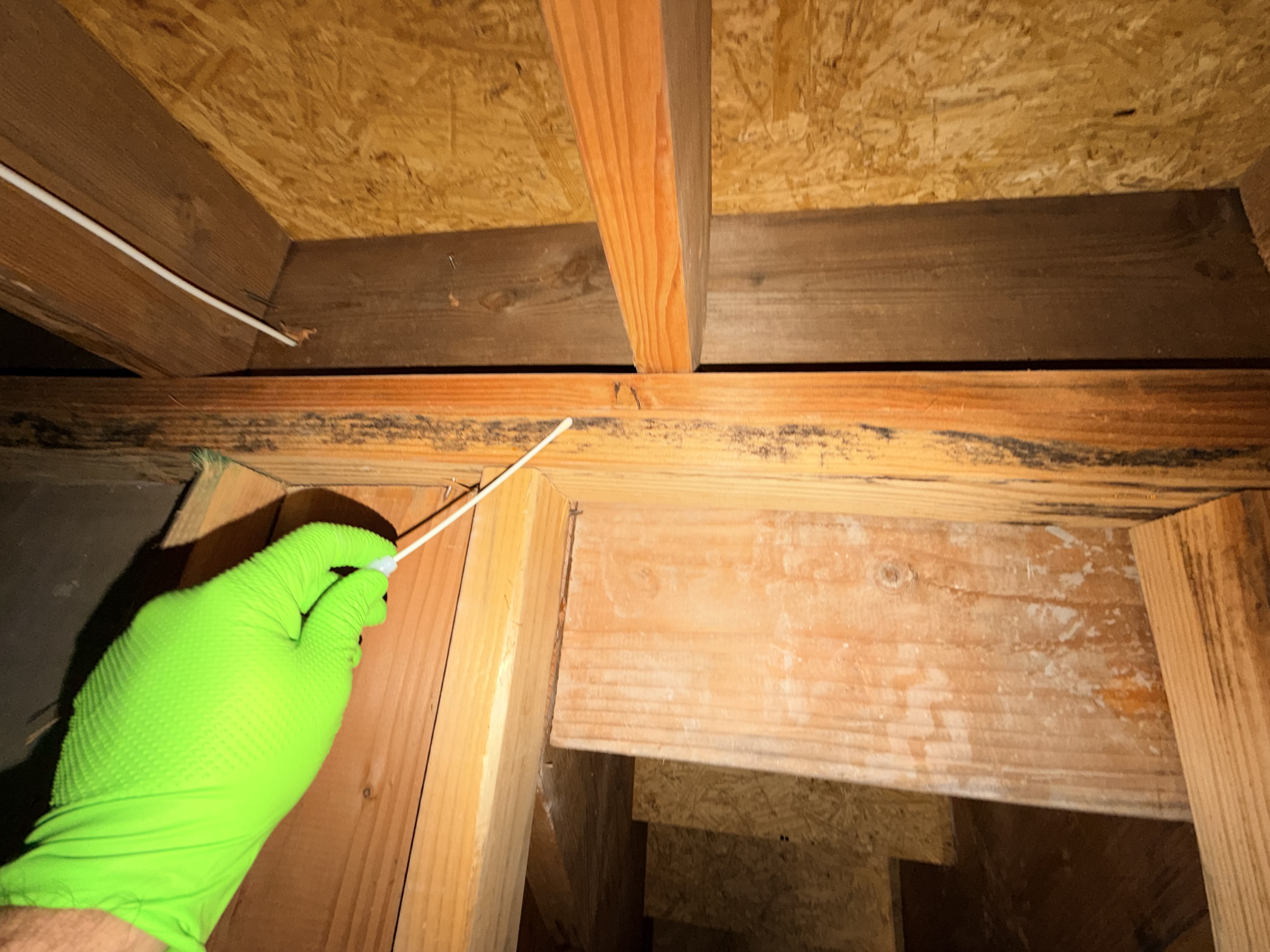
Air samples measure what occupants breathe against an outdoor control taken the same day. Swab samples confirm what is on a specific surface. Both go to an independent accredited laboratory, and the types of sampling used are chosen to answer a question rather than to fill a page.
The detailed report
Findings, locations, photographs tied to a floor plan, laboratory data in full, the moisture source, and a plain statement of what the evidence supports and what it does not. We explain the reasoning rather than asserting a conclusion, because a reader who can follow the logic can rely on it.
Credentials and certification
Certified mold inspectors are the baseline, and in California certification is voluntary because the state does not license this work at all. Ask which body issued it, at what level, and whether it is current. Training and continuing education are what keep a certification meaningful rather than decorative.
Expertise in this context also means knowing the limits of the instruments. An inspector who presents a thermal image as proof of mold has told you something useful about their expertise, just not what they intended.
Why independence is the load-bearing part
We inspect and test only. We never perform remediation and we take no fee from any company that does.
In a forensic context that is not a marketing line. It is the first thing opposing counsel probes, and it takes them about a minute. An expert whose firm also sells the cleanup has a financial interest in the severity of the finding, and every number in the report inherits that problem.
Inspectors with nothing to sell can report that a mold problem is a plumbing stain and nothing more. That answer costs us nothing, which is exactly why the other answers are worth something.
Who this work is for
Attorneys
Landlord and tenant matters, construction defect, insurance coverage disputes and personal injury. We support counsel from the first visit through deposition, and we say early when the evidence does not support the theory of the case. Tenants and owners are both represented in our client base, which is what keeps the work neutral.
Physicians
Referring physicians need to know what a patient is being exposed to. We provide the environmental measurement and leave the clinical interpretation where it belongs.
Property managers and building owners
Multifamily and commercial property, where a complaint from 1 unit has to be answered for the whole building, and where the answer may be read by a regulator or a court. Protecting a business here means documenting the condition before somebody else characterizes it for you.
Insurers and adjusters
Coverage frequently turns on whether water damage was sudden or gradual. That is a moisture question before it is a mold question, and it is answered by measurement.
What a forensic report will not do
It will not diagnose anyone. It will not establish that a building caused a specific person’s illness, because environmental sampling cannot demonstrate that and no careful inspector will claim otherwise.
It will not name a remediation company or write mold remediation protocols for a contractor we have a relationship with, because we have no such relationships. Where a scope is needed, we describe the condition and the extent, and other companies bid against that.
And it will not tell you what you want to hear. That is the point of commissioning it.
Where we work
Orange County, Los Angeles, Riverside, San Bernardino and San Diego counties. Site visits are scheduled by appointment, and we will talk through the matter before booking so the scope of services is agreed in advance.
Common questions
What is the most accurate test for mold?
There is no single most accurate test. A visual inspection plus moisture mapping establishes the condition, and laboratory analysis of air and surface samples identifies what is present. Sampling without an inspection produces a number with no context.
Is mold considered uninhabitable?
There is no federal threshold and no California standard defining a spore count that makes a property uninhabitable. Habitability is decided from extent, duration, the occupants involved and the applicable code, not from a number.
Can a house with mold be saved?
Almost always. The question is scope and cost, which is what an accurate boundary determines.
How much does a forensic inspection cost?
More than a basic visit, because the documentation standard is higher and it takes longer. It is a fraction of what a disputed claim costs when the evidence is thin.
Do you provide expert witness testimony?
Yes. Site investigation, written reports, rebuttal review, deposition and trial testimony.
Get findings that hold
We provide independent mold inspection, mold testing and forensic documentation services across Southern California, for clients who need a record rather than an opinion.
Inspection and testing only. Never remediation, which is precisely why the findings survive being read by the other side. Contact us to schedule an inspection or discuss a matter.
Get an objective answer for your property
Book a certified, independent inspection and get an objective, lab-backed report you can act on. Learn about a mold inspection.
- Independent, no remediation upsell
- Accredited-lab reporting
- ACAC & IICRC certified